Orbital ports / Development journal
Two stations, two kinds of arrival
Aristyllus and Port Jupiter develop distinct identities as an Earth-orbit habitat and an industrial transfer harbor.
First Principles Interactive
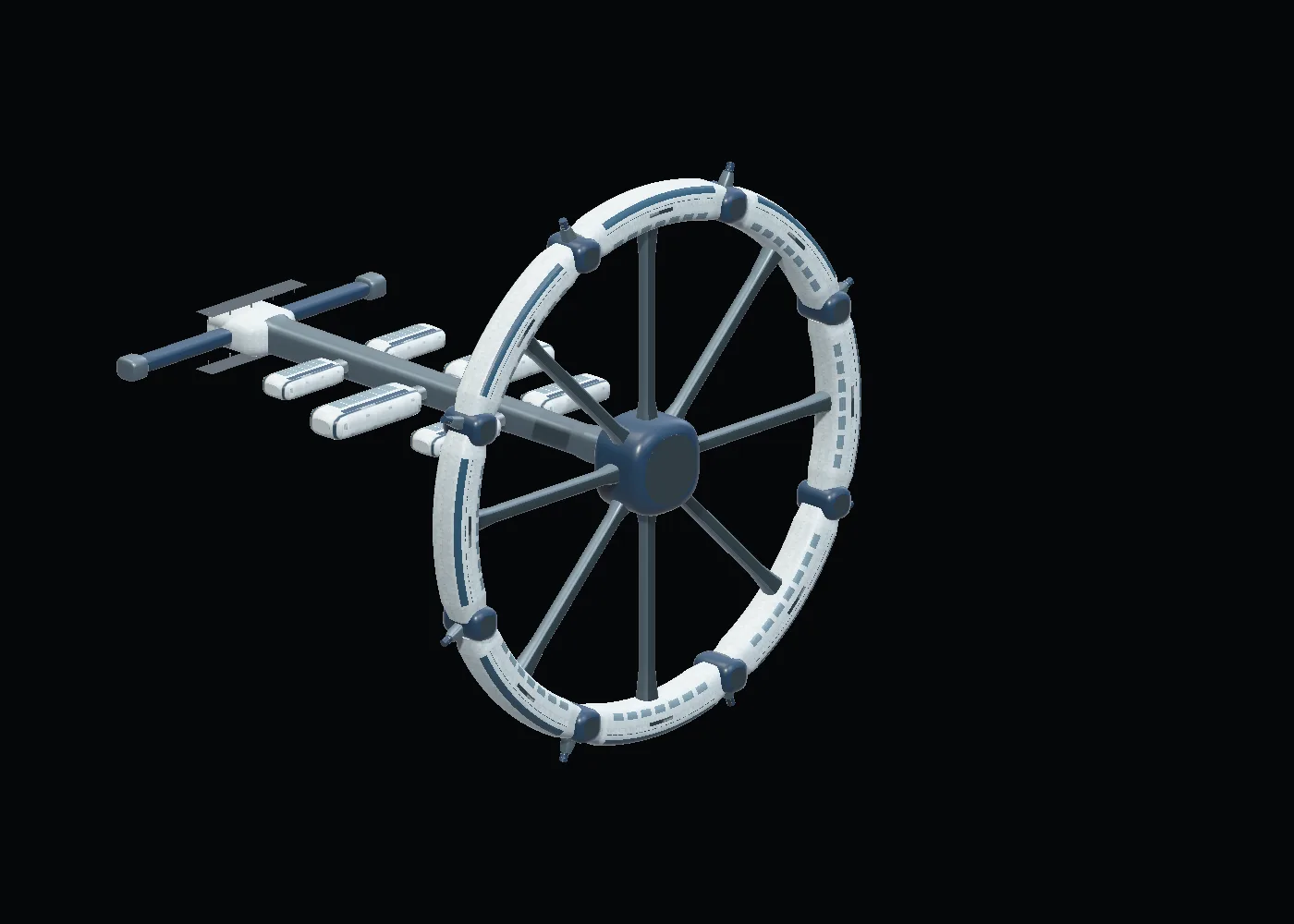
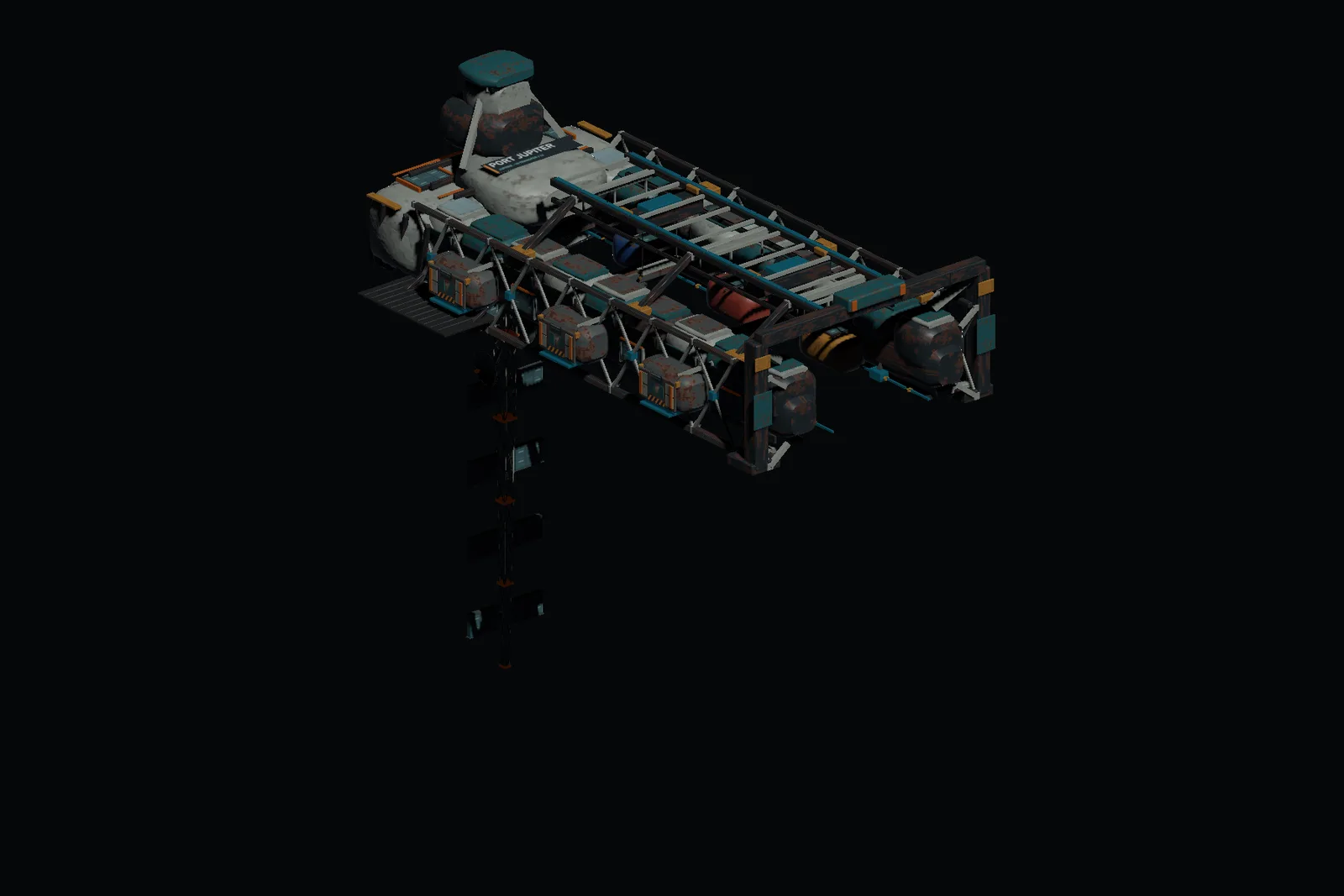
An orbital port should tell you something about its role before you read its name. Aristyllus and Port Jupiter are growing in different directions, with their structures and surfaces doing much of that work.
Aristyllus: the inhabited ring
Aristyllus has a broad, recognizable habitat ring supported by spokes, with logistics modules extending along its axis. Its latest finish uses pale ceramic surfaces, deep blue coatings, structural metal, and darker service details.
The materials bring out the separation between the inhabited ring and the machinery supporting it. Identification bands and docking markings keep the working parts legible as you close the distance.
Port Jupiter: a working harbor
Port Jupiter is more exposed and industrial. Two long armored rails frame an open freight corridor, with berth pods, trusses, machinery, and communications structures defining the silhouette.
The finish follows that purpose: graphite structure, worn pale shells, blue-green service housings, and oxidized metal. The wear gives individual surfaces character while the station remains readable as a whole.
These are places to bring a ship alongside. Their different shapes give arrivals a different visual rhythm: the broad ring near Earth, then the long industrial frame at the edge of the settled system.